Introduction
If your translated pages aren’t showing up in Google or appearing in AI-driven results, you’re not alone. The path to multilingual visibility rests on solid technical setup, content quality, and thoughtful localization, which all play a vital role in quality signals and content evaluation. This includes key elements like EEAT and helpful content principles that determine how well your translated content is perceived. Here is a concise guide to get back on track.
Google’s stance on machine translation has evolved. A recent update shifted focus away from blocking auto translated pages via robots.txt and toward evaluating content quality and its impact on SEO visibility, including proper handling of Google indexing for translated pages. AI translated pages can perform well when they deliver real value, coherence, and proper signals to search engines, positively influencing their visibility. High-quality translations carry the authority of the source, while low-quality output or keyword stuffing can be treated as spam, potentially harming SEO rankings and overall visibility in search results, especially regarding how they are indexed by Google.
To improve indexation and AI search visibility, focus on three pillars: technical setup, content quality, and Google Support signals. Start by ensuring your translated versions are crawlable and correctly signaled to search engines, as this is crucial for Google indexing of translated pages. Understanding crawling fundamentals and URL discovery is essential, particularly for new websites, where establishing indexed pages and ensuring URLs can be effectively discovered from the outset can significantly boost visibility. Verify that the content is genuinely helpful for users in each language and region. Additionally, align metadata, URL slugs, and internal linking strategies to ensure each language variant supports clear discovery and enhances overall crawlability. For ongoing insights, many teams maintain blogs that document localization challenges, experiments, and learnings to inform future updates across multilingual pages. Also, AI Overviews offers concise, expert summaries that help teams quickly grasp localization best practices and AI-assisted ranking signals across languages.
To streamline audits, many teams use Screaming Frog to crawl and visualize how translated pages signal language, crawlability, and indexation signals across multilingual sites.
AI translation can boost efficiency, but it introduces indexing considerations that impact the SEO scoring methodology for translated content. Machines can index AI translated pages, yet quality signals and correct signals matter. The goal is to deliver content that reads naturally in the target language while effectively signaling language, region, and user intent to search engines, thereby enhancing its overall SEO score.
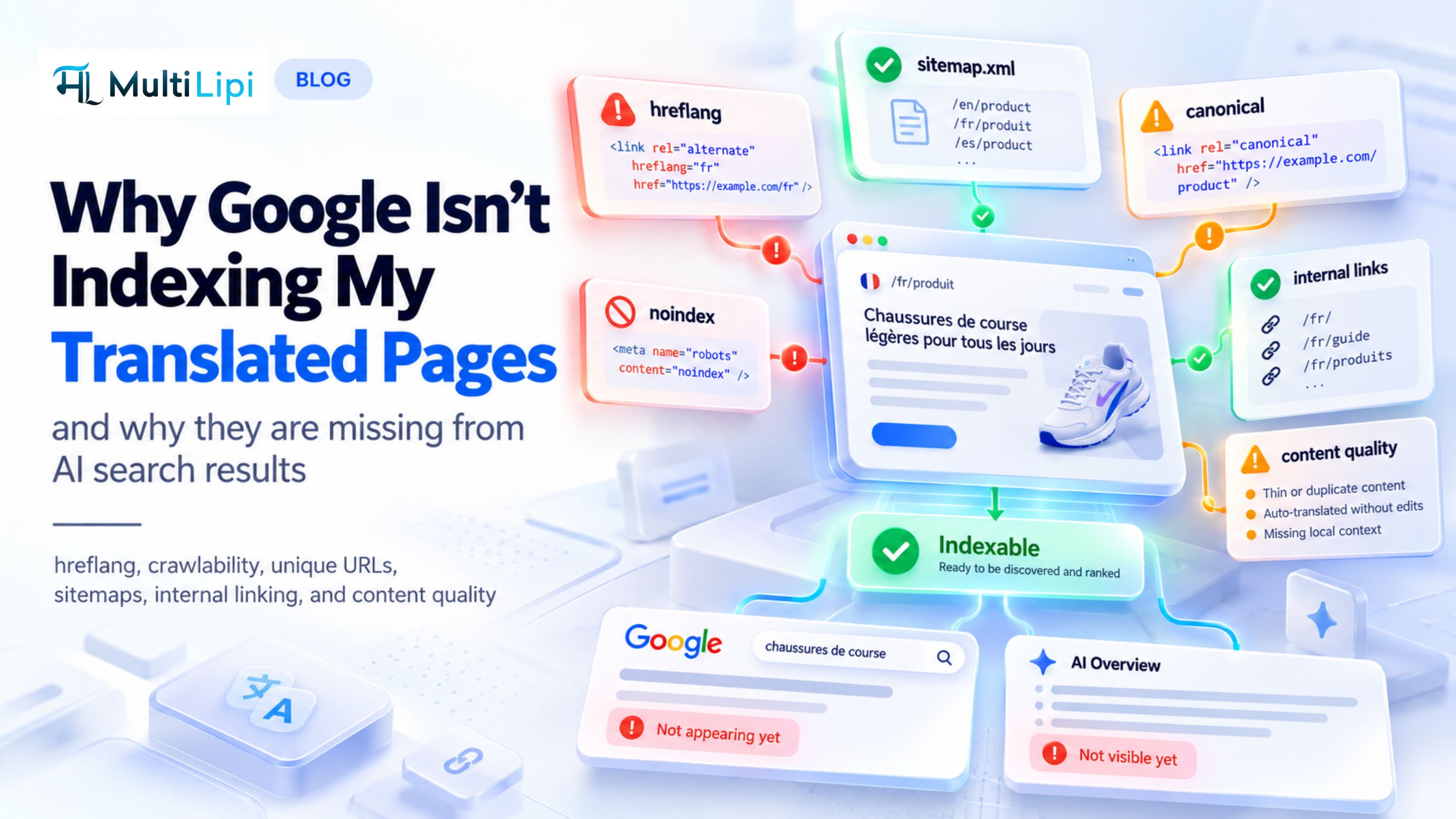
Key realities to keep in mind include how hreflang implementation and signaling effectively indicate language and locale, how distinct translated URLs along with proper canonicalization help avoid duplicate content, and how well-structured metadata supports multilingual search results and language settings. Additionally, ensuring proper hreflang signaling enhances the way search engines understand which content to serve to users based on their language preferences. Furthermore, content depth and strategic keyword usage for multilingual pages further enhance visibility, making it easier for search engines to index and rank your content effectively. By optimizing these elements, including the use of distinct translated URLs and thoughtful canonicalization, your translated pages not only cater to diverse language preferences but also enhance their chances of appearing in AI-driven results and traditional search alike.
- Search engines first need a crawlable URL and a clean path to every language version.
- Hreflang, canonicals, sitemaps, and metadata must agree on which locale each page serves.
- Only then can translation quality, local usefulness, and authority influence rankings and AI visibility.
The multilingual indexation path
Crawlable translated URLs, internal links, and sitemap discovery.
Language codes, hreflang, canonicals, metadata, and locale consistency.
No robots or noindex blockers, duplicate confusion, or broken alternate references.
Helpful localized content earns search visibility and stronger eligibility for AI answers.
Ensure Proper hreflang and language signaling
Using correct hreflang attributes for translated pages
Hreflang signals are essential components of multilingual SEO technical requirements, helping search engines identify the language and region a page targets. Implement explicit, standards-based values and include self-referential hreflang tags on every page. Additionally, create separate XML sitemaps for each language version, ensuring that each language variant is properly indexed and easily accessible.
Keep hreflang values consistent across the site and in sitemaps. When you add new language versions, refresh the entire set to maintain mutual recognition. Missing or incorrect hreflang data can lead to misinterpretation by crawlers and lost regional intent.
Country and language code accuracy across locales
Match language codes to the intended audience and locale. For example, en-us and en-gb differentiate US and UK English, while es-es targets Spain. Use the correct two-letter language and region codes in all signals.
Regularly audit pages for code drift. If a page serves multilingual content but signals a single language, search engines may lose the intended regional context. Consistency across HTML, sitemaps, and canonical tags matters for reliable indexing.
Every page declares itself and its alternate language or region versions.
The same URL relationships are reflected in discovery files without code drift.
Each locale preserves its own indexable identity instead of collapsing into another language.
Create distinct translated URLs and avoid duplicate content
Canonicalization and URL structure for multilingual sites
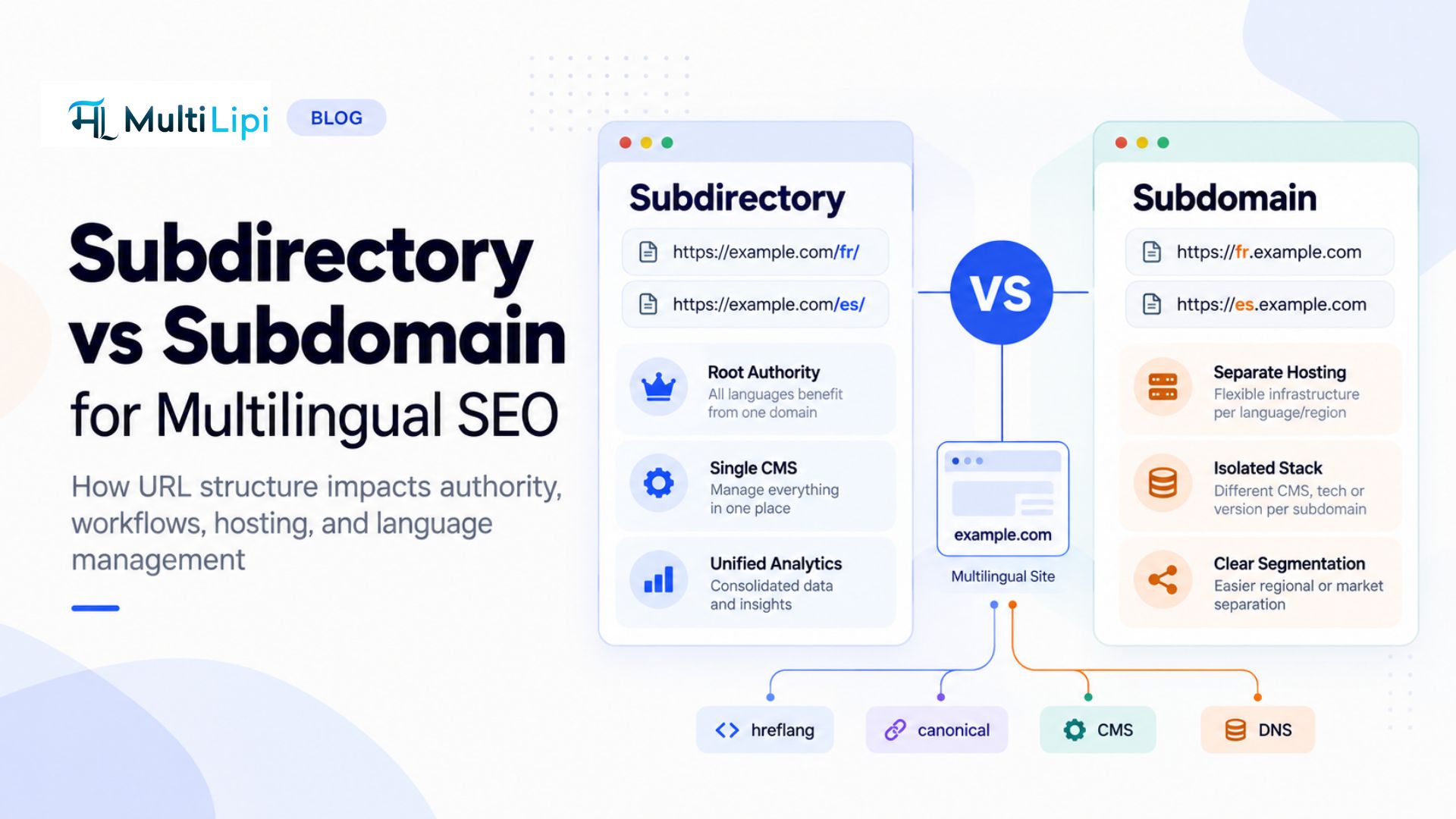
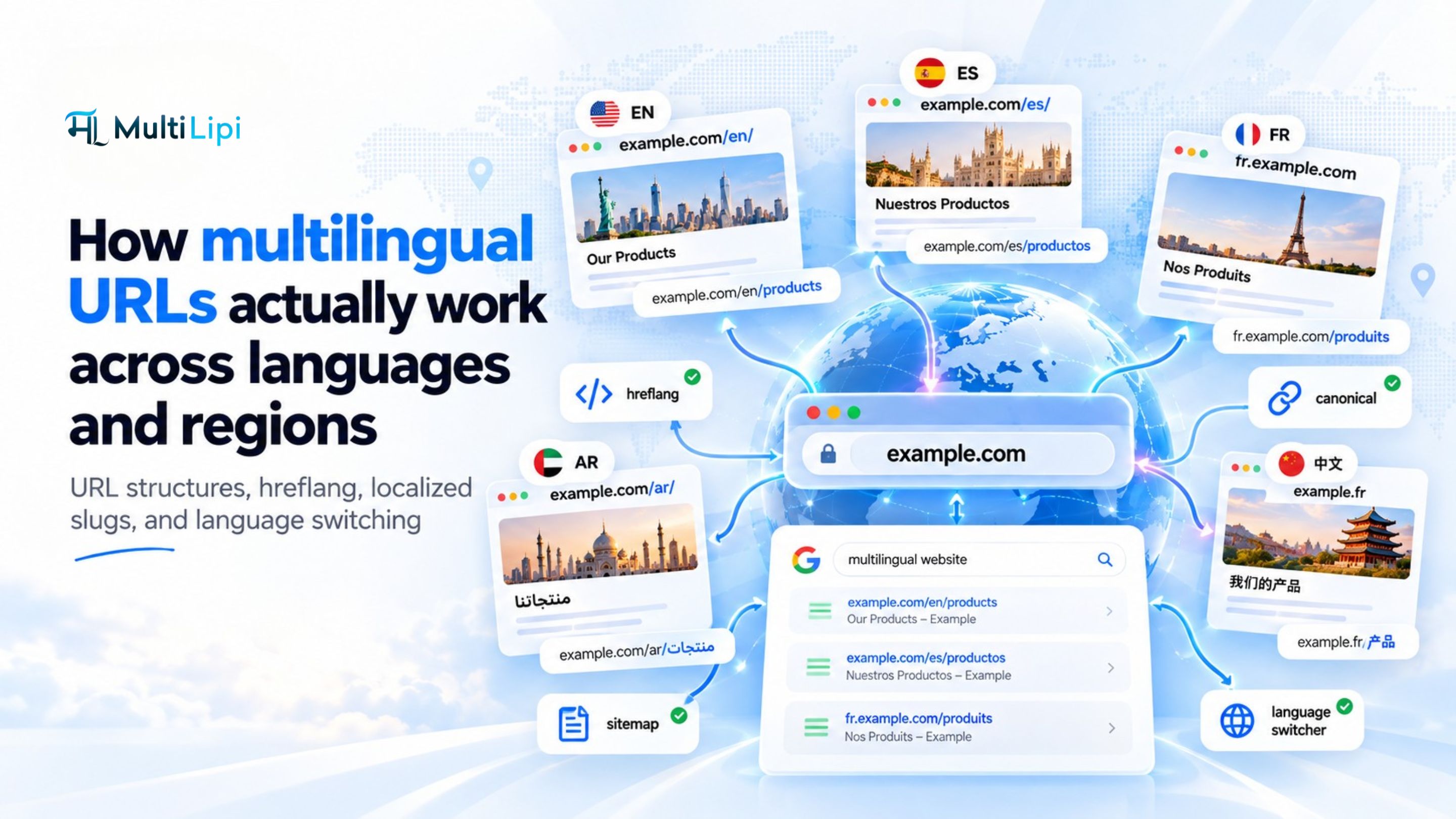
Assign a unique URL to every language variant, as distinct URLs provide crucial indexing signals that help search engines differentiate translations from duplicates. Additionally, implementing canonicalization can further clarify preferred versions between similar content. Use clear patterns that signal language and region, such as example.com/fr/ and example.com/es/ for French and Spanish.
Keep URL schemes consistent across locales. Avoid mixing languages within a single path segment or using query parameters to switch languages. A clean, readable structure supports reliable crawling and indexing.
Avoiding identical content across language variants
Make sure translated pages carry language specific signals rather than just literal copies. Adapt headings, examples, and calls to action to fit the target language and culture. This reduces perceived duplicates and improves relevance for users.
Create a strong internal linking structure within each language version of your site. Use canonical tags only when pages are truly language-specific. If you reference the original language, keep canonicalization focused on the primary variant while letting hreflang guide discovery to the correct translations.
Submit multilingual sitemaps and enable language variants in indexing
Ensuring search engines discover all language versions
Make sure each translated page is reachable via its own URL and is correctly linked from other language versions. Use mutual hreflang references in the sitemap and on page signals to reinforce language intent. Monitor coverage reports in your webmaster tools to catch any missing variants.
Keep primary and translated pages in sync when you publish new content. If you add a new article in one language, update related translations in the sitemap to preserve consistent indexing signals. This helps search engines surface the right language version to the right audience. Tools like TranslatePress or DeepL can help, but accurate signaling remains essential.
Optimize on-page signals for translated pages
Meta titles and descriptions in each target language
Create unique meta titles and descriptions for every language variant, keeping in mind metadata translation best practices to enhance your visibility. Reflect the page topic in the target language and keep titles concise enough to fit search results. Blend primary keywords naturally without stuffing, and align descriptions with user intent in each locale to boost click-through rates. Additionally, ensure that your Open Graph (OG) data is also translated effectively to maintain consistency across social platforms and improve engagement.
Make sure metadata accurately reflects the page content. Avoid auto translated blocks that miss nuance or local relevance. Regularly audit titles and descriptions as you update translated content to preserve accuracy and usefulness.
Language-appropriate content quality and structure
Adapt not just the language but the content structure to match local reading patterns. Use clear headings, short paragraphs, and culturally familiar examples in each language. Keep the information hierarchy consistent across variants so users see equivalent value.
Prioritize high quality translations over literal rendering. Incorporate locale-specific terms, date formats, and units where appropriate. This signals to search engines that the page is tailored for the audience, supporting better indexing and user satisfaction.
"SEO translation is not merely translating words; it’s aligning local search intent with localized metadata, URLs, and structure so each language version ranks, engages, and converts in its own market." , Industry Analyst
Technical accessibility and crawlability checks
Robots.txt and noindex pitfalls to avoid
Review your robots.txt to ensure it doesn’t block essential language variants or translation directories, as using robots.txt to control Google crawling effectively can help manage which pages are indexed. A misconfigured file can prevent Google from crawling translated pages, keeping them out of the index and diminishing the reach of your multilingual content.
Audit pages for noindex directives. An accidental noindex on key language versions can shrink your index footprint and hinder AI driven results. Leverage Google Search Console for indexing issues to pinpoint and resolve any noindex directives swiftly, ensuring that your content is efficiently indexed.
- A strong translation cannot rank if robots.txt, noindex, broken navigation, or orphaned locale URLs keep crawlers away.
- Diagnose access first, then language signaling, then content quality - in that order.
- This sequence prevents teams from rewriting content when the real problem is technical discovery.
Crawl budgets and site architecture considerations
Map your site architecture so crawlers discover language variants without backtracking, ensuring optimal crawl budget utilization for AI content indexing. Maintain a logical hierarchy that mirrors user navigation and language selection paths, making it easier for crawlers to efficiently index your content.
Prioritize crawl efficiency by grouping related pages and avoiding thin or duplicate content across translations, especially for AI-generated content. Such content often carries risks of duplication and lack of depth, which can hinder search engine performance. A lean, well-structured crawl plan helps search engines allocate budget to valuable pages, ensuring that AI translated content is not only unique but also adds genuine user value.
"Crawl budgets and site architecture are the levers that ensure technical SEO can scale for large, dynamic sites and that AI-driven crawlers can access and interpret your content efficiently, making a lean, well-structured crawl plan essential for sustainable visibility." , Industry Analyst
Internal linking and site structure for multilingual SEO
Strategic internal links between language variants
Build deliberate internal links that connect each language version to its equivalents in other locales. Use reciprocal links to clarify language intent and help search engines map your global structure.
Prefer language selectors that point to equivalent pages rather than generic homepage routes. Keep a consistent URL structure across variants so crawlers can understand relationships reliably.
- Place links within main navigation to relevant language versions.
- Include language switcher options on every page that clearly directs to the same content in another language.
- Use self-referencing and reciprocal hreflang signals alongside on page links.
Navigation patterns that signal language intent
Design navigation so the language choice is obvious to users and crawlers alike. Clear pathways reduce confusion when switching between locales.
Adopt predictable prefixes for language variants, such as /en/, /fr/, /de/, and mirror the structure across locales to maintain consistency.
- Maintain a consistent content hierarchy across all language versions.
- Avoid deep nesting that can disrupt crawl paths between translations.
- Test navigation with search engine tooling to confirm all language variants are discoverable.
"When your target audience is global, having search‑optimized digital content becomes even more pressing to ensure visibility in different markets." , Industry Analyst
Common mistakes developers make with AI translations
Over-reliance on machine translation without quality signals
Relying solely on AI translation can yield content that feels generic or off for the target audience. Add quality signals such as human edits, locale validation, and domain expertise to preserve accuracy and relevance.
Pair machine output with professional review steps. Involve native speakers to verify terminology, tone, and cultural fit. This combination helps search engines recognize high quality content and improves AI driven results over time.
Ignoring localization nuances that impact indexing
Localization goes beyond wording. It includes date formats, currency, units, and cultural references that align with local expectations. Skipping these details can undermine user trust and the engagement signals that influence rankings.
Implement locale aware templates that adjust more than text. Use region specific examples, imagery, and pitfalls to signal resonance with local audiences. Consistent localization supports EEAT signals in AI search results.
FAQ
Why isn’t Google indexing my translated pages yet?
Common causes include missing or incorrect hreflang signals, duplicate content across language variants, and blocked crawl paths in robots.txt. Review your language signaling, ensure each translation has a distinct URL, and confirm that noindex tags aren’t hiding key pages from the index.
Do AI translated pages affect SEO visibility?
AI translated pages can be indexed, but visibility depends on content quality and technical setup. Focus on accurate localization, proper metadata, and robust internal linking to improve rankings and AI driven results.
How should I structure my multilingual URLs?
Use clear language prefixes or subdirectories that map to each locale, and keep a consistent pattern across all languages. Distinct URLs help search engines map translations and avoid content confusion.
What role do sitemaps play in indexing language variants, and how can site indexing verification methods like 'site:domain' searches and checking index status help ensure that these variants are appropriately recognized by search engines?
Hreflang aware sitemaps help search engines discover all language versions. Include language codes and region codes for each URL and keep the sitemap up to date with new translations.
How can I test indexing for translated pages?
Use the search console to inspect indexing status, submit updated sitemaps, and check for crawl errors. Verify that each language page is crawlable and properly signals its language and region intent.
Conclusion
Getting translated pages indexed hinges on clear signals and solid technical setup. Treat AI translation as a starting point, and add localization quality signals that search engines recognize.
Key takeaways: consistent language signaling, distinct translated URLs, and thoughtful internal linking. These practices help Google and other engines map language variants and surface the right content to the right users.
At MultiLipi we focus on AI enabled localization that respects multilingual SEO standards. By aligning hreflang, sitemaps, and on page metadata with locale specifics, you can improve AI driven results and overall visibility across languages.
Monitor with standard SEO tools to catch crawl issues early and keep language variants in sync as content evolves. A disciplined, signal rich multilingual strategy supports better indexation and more reliable rankings across markets.
Related MultiLipi resources
Use these tools and guides to diagnose multilingual discovery issues, validate language signals, and improve translated-page visibility.